
Walking down endless aisles of kibble and cans can leave any animal lover puzzled. With countless options claiming to be “premium” or “complete,” selecting proper nourishment for your companion requires more than quick label scans. Nutrition directly impacts energy levels, coat health, and long-term wellness – making this decision one of the most vital for responsible owners.
This guide cuts through confusing marketing terms with science-based evaluation methods. Discover how to interpret ingredient lists like a veterinary nutritionist and identify formulas matching your furry friend’s age, breed, and activity level. We’ll explore what really matters in dietary profiles, from protein sources to regulatory standards.
You’ll gain practical tools to compare products objectively, even when packaging designs compete for attention. Learn why some budget-friendly options outperform expensive brands and how to spot red flags in nutritional claims. Whether feeding a playful puppy or senior cat, these strategies adapt to life stages and special needs.
Key Takeaways
- Proper nutrition significantly affects pets’ health and longevity
- Ingredient analysis beats marketing claims for evaluating quality
- Life stage and breed requirements dictate ideal formulas
- Regulatory standards help filter unsafe products
- Cost doesn’t always reflect nutritional value
- Customizable approaches work better than one-size-fits-all solutions
Arm yourself with knowledge that transforms overwhelming choices into clear action steps. Let’s create a tailored feeding plan that keeps tails wagging and purrs rumbling for years to come.
Understanding Pet Nutrition for a Healthy Pet
Your furry friend’s bowl holds more than just meals—it’s the foundation of their vitality. Balanced diets support strong immunity, shiny coats, and lasting energy. Let’s explore what makes nutrition click for our four-legged companions.
Why Proper Nutrition Matters
Food fuels every leap, purr, and tail wag. Quality ingredients build muscle, sharpen minds, and help fight illnesses. Puppies need different fuel than senior animals, just like athletes require unique meals compared to couch companions.
Did you know? Dogs process proteins differently than cats. This explains why you can’t swap their foods. Matching meals to species and age prevents deficiencies and keeps joints moving smoothly.
AAFCO Guidelines Overview
The Association of American Feed Control Officials sets the rules for pet meals. Their standards ensure products meet minimum nutritional requirements for specific life phases. Look for these key details on labels:
| Life Stage | Nutritional Focus | Example Needs |
|---|---|---|
| Growth | High protein & calcium | Puppy formulas |
| Adult Maintenance | Balanced nutrients | Standard kibble |
| All Life Stages | Versatile composition | Multi-pet households |
This framework helps owners match food to their animal’s current needs. Always check for an AAFCO statement—it’s your assurance against empty marketing claims.
Decoding Pet Food Labels
Pet food packaging often resembles a colorful puzzle of claims and numbers. Crack the code by focusing on two nutritional cornerstones: the ingredient list and guaranteed analysis. These elements reveal what’s actually fueling your companion’s zoomies and naps.
Reading the Ingredient List
Items appear in descending order by weight. The first three ingredients typically make up 70% of the formula. Look for specific sources like “beef liver” instead of vague terms like “meat products”.
Chicken meal or lamb meal might sound questionable, but these concentrated proteins pack more nutrients than whole meats. Watch for splitting tactics—when manufacturers divide one ingredient into smaller parts (corn, corn gluten, corn syrup) to push it down the list.
Guaranteed Analysis Explained
This chart shows minimum or maximum percentages for key nutrients. Compare dry foods to dry foods using these numbers directly. For wet foods, subtract moisture content first—a can showing 8% protein actually offers 40% protein when water’s removed.
Quality formulas exceed basic requirements. While AAFCO sets 18% protein minimums for adult dogs, optimal options hit 25-35%. Remember: higher percentages don’t always mean better quality, but they often indicate richer nutrition.
how to choose the best pet food brand
Many well-meaning owners grab bags with appealing pictures, unaware that labels hold critical clues. The secret to quality meals lies in verified nutritional adequacy statements – your first checkpoint for safety and effectiveness.
What Makes Diets Truly Complete?
Dr. Jonathan Stockman, veterinary nutritionist at Long Island University, advises:
“Always verify the AAFCO statement matches your dog’s life stage. This simple step prevents nutritional gaps that affect energy and longevity.”
Complete balanced formulas contain precise nutrient ratios for specific needs. Look for these markers:
- AAFCO adequacy declaration near ingredients list
- “Feeding trials” designation over “formulated” claims
- Life stage alignment (growth, adult, all-life)
Foods tested through feeding trials show real-world results. They outperform formulas relying solely on lab analysis. Check labels for phrases like “animal feeding tests” – these products underwent rigorous safety checks.
Avoid relying on treats or supplements as main meals. These lack essential vitamins and minerals for sustained health. When comparing options, prioritize brands disclosing their testing methods and nutritional validation processes.
Considering Life Stages in Pet Nutrition
Your companion’s nutritional needs evolve like seasons – what fuels a bouncing puppy won’t sustain a seasoned senior. Tailored formulas address these shifting requirements, supporting health through every life chapter.
Puppy, Adult, and Senior Requirements
Growing animals need building blocks. Puppy food packs 25% more protein than adult versions, plus extra calcium for developing bones. Large breeds require specialized formulas – excess nutrients can cause joint issues in fast-growing giants.
Transition timing matters. Small dogs mature faster than their larger cousins:
| Breed Size | Maturity Age | Key Nutrients |
|---|---|---|
| Small | 10-12 months | High-density calories |
| Medium | 12 months | Balanced omegas |
| Large | 12-18 months | Controlled calcium |
| Giant | 18-24 months | Joint-support compounds |
Dr. Emily Carter, veterinary nutritionist, notes:
“Feeding adult formulas too early stunts development, while sticking with puppy food past maturity risks obesity. Timing is everything.”
Mature companions thrive on leaner meals. Senior blends often add glucosamine for aging joints, though AAFCO doesn’t regulate these formulas. Always consult your vet when switching older pets.
Watch for “all life stages” labels – these often contain puppy-level nutrients unsuitable for sedentary adults. Match meals to your friend’s current phase, not marketing claims.
Evaluating Ingredients and Nutritional Requirements
Selecting the right components for your canine companion’s meals goes beyond flashy packaging. Nutrient-rich formulas rely on precise combinations of proteins, carbohydrates, and essential elements that support daily adventures and long-term wellness.
Protein Sources and Carbohydrates
Named proteins like deboned chicken or wild-caught salmon should dominate ingredient lists. These provide amino acids crucial for muscle development and immune function. Watch for “meal” versions – chicken meal offers 300% more protein by weight than fresh poultry due to moisture removal during processing.
| Protein Type | Key Benefits | Common Sources |
|---|---|---|
| Whole Meats | High moisture content | Beef, turkey, cod |
| Meat Meals | Nutrient-dense | Lamb meal, herring meal |
| Plant Proteins | Fiber-rich | Lentils, chickpeas |
Carbohydrates fuel playtime and brainpower. Look for whole grains like oats or gluten-free options like sweet potatoes. These complex carbs digest slowly, maintaining steady energy levels without blood sugar spikes.
Essential Fats, Minerals, and Vitamins
Omega fatty acids from sources like anchovy oil keep coats gleaming and joints supple. Dr. Lisa Morrison, veterinary nutritionist, emphasizes:
“Balanced calcium-to-phosphorus ratios (1.2:1) prevent bone issues in growing pups and aging dogs alike.”
Premium blends often include zinc for skin health and vitamin E for cell protection. While exotic ingredients trend online, proven staples like chicken fat and flaxseed deliver reliable nutrition without digestive upset.
Store-Bought vs. Homemade Pet Food: Pros and Cons
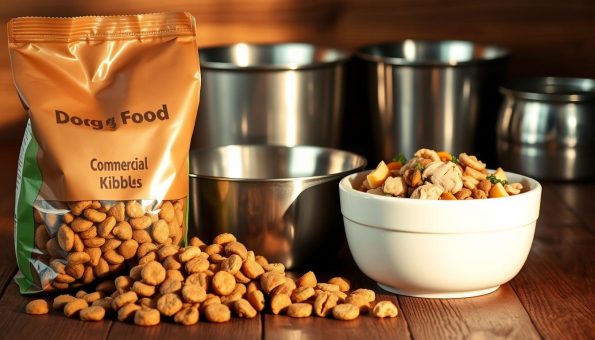
What’s really in your dog’s dinner bowl? While homemade meals might seem wholesome, creating nutritionally complete dog food requires precision most recipes lack. Commercial options offer tested formulas, while DIY approaches demand expertise and commitment.
Preparing meals requires hours weekly for ingredient prep, cooking, and portioning. Costs add up quickly—grass-fed meats and organic veggies often exceed premium kibble prices. Dr. Sarah Wilkins, veterinary nutritionist, warns:
“Even carefully researched recipes often miss critical nutrients like zinc or vitamin E. We see bone deformities in dogs fed generic chicken-and-rice diets long-term.”
| Factors | Homemade | Commercial |
|---|---|---|
| Cost | $3-5 daily | $1-3 daily |
| Time Investment | 5+ hours weekly | 5 minutes daily |
| Safety | Bacterial risks | Tested protocols |
| Nutritional Balance | Requires expert input | Pre-measured |
Raw diets introduce extra hazards. The AVMA reports salmonella in 25% of raw poultry-based foods—risking both dogs and families handling contaminated bowls. Commercial manufacturers use high-pressure processing to eliminate pathogens while preserving nutrients.
For determined home chefs, partnering with certified veterinary nutritionists remains essential. These specialists create custom recipes using bloodwork analysis and weight monitoring. Most owners find store-bought foods deliver consistent results without the fridge-stuffing chaos.
Quality commercial options undergo rigorous feeding trials—something few home cooks can replicate. While fresh ingredients appeal, remember: complete nutrition beats culinary creativity for your dog’s lifelong health.
Pet Food Safety and Regulatory Standards
Behind every bag of kibble lies a complex safety net most owners never see. Rigorous testing protocols and quality controls ensure meals meet strict biological requirements for different species and life stages.
Understanding AAFCO Nutritional Guarantees
The Association of American Feed Control Officials sets the gold standard for pet food safety. Their guidelines verify products provide complete nutrition through either feeding trials or lab-tested formulas. Look for “formulated meet nutritional profiles” statements on dog food labels – this confirms adequacy beyond basic ingredients.
Decoding the guaranteed analysis helps match meals to your companion’s specific nutritional needs. Percentages for protein, fats, and fiber must meet minimum thresholds, but premium brands often exceed them. Always cross-check these numbers with your vet’s recommendations.
Remember: regulations protect pets, but informed owners add an extra layer of safety. Pair label literacy with professional guidance to build a diet that fuels vitality at every age.