Raising a young pet comes with big responsibilities—and even bigger rewards. During their first year, your furry companion’s body undergoes rapid changes that shape their future health. Providing the right fuel during this phase isn’t just about meals—it’s about building resilience for a lifetime of adventures.
Newborns transition from milk to solid food quickly, needing twice the energy of adult pets to support muscle, bone, and cognitive development. Without proper care, gaps in their diet can lead to long-term challenges. But with the right approach, you’ll set them up to thrive during hikes, camping trips, or backyard play.
This guide simplifies the science behind feeding schedules, ingredient quality, and growth milestones. You’ll learn how balanced meals strengthen immunity and energy levels—key for pets who love exploring the outdoors. Whether your companion enjoys Tailyan’s adventure backpacks or cozy tents, their nutrition directly impacts how they experience the world with you.
Key Takeaways
- Young pets require up to double the calories of adults for healthy development
- Early nutrition choices influence lifelong immune strength and activity levels
- Tailored feeding schedules prevent over/underfeeding during growth spurts
- Quality ingredients support bone density and cognitive function
- Proper diets reduce risks of obesity and joint issues later in life
- Active pets benefit from nutrient-rich foods that fuel outdoor adventures
Understanding Puppy and Kitten Nutritional Needs
Caring for a growing pet involves more than love—it’s about science-backed nourishment. Young animals require six essential nutrient classes to thrive: water, protein, fats, carbohydrates, vitamins, and minerals. Each plays a distinct role in building strong bodies and sharp minds.
Building Blocks for Thriving Companions
Protein acts like construction crews, creating muscle and repairing tissues. Growing puppies need 22-32% protein in their food, while kittens require up to 30%—nearly double adult requirements. These amino acids fuel everything from wagging tails to climbing skills.
Fats provide concentrated energy for playtime adventures. Omega-3 fatty acids like DHA shape brain connections and vision clarity. “Proper fat ratios help kittens develop night vision for moonlit explorations,” notes veterinary research.
Balancing the Nutritional Equation
Vitamin imbalances can weaken bone density, while calcium shortages might affect future agility. Specially formulated foods account for rapid growth phases, delivering precise mineral combinations. Unlike generic diets, these recipes support immune systems adapting to new environments.
Overfeeding carbohydrates might lead to energy crashes during hikes, while insufficient vitamins could reduce stamina. Always check labels for AAFCO statements confirming complete nutrition for growth stages. Your choices today directly impact their ability to chase butterflies or conquer cat trees tomorrow.
The Science of Energy Requirements for Growing Pets
Fueling active young companions requires precise calculations, not guesswork. Their bodies work like high-performance engines—every leap, sprint, and growth spurt demands exact energy ratios. Veterinarians use metabolic formulas to determine caloric needs based on weight and development phases.
Calculating Resting and Maintenance Energy Requirements
The process starts with resting energy requirement (RER): 70 multiplied by body weight in kilograms raised to the 0.75 power. This baseline measures calories burned at complete rest. For growing animals, multiply RER by specific factors to account for bone development and muscle growth.
A 15kg puppy needs 533kcal daily just for basic functions. But during growth spurts, their maintenance energy (MER) jumps to 1,066kcal—double the resting needs. These multipliers change monthly as metabolism stabilizes.
Examples of Energy Needs in Different Life Stages
Calorie demands peak during early months. A 12-week-old kitten requires twice its RER, while large-breed pups under 4 months need triple their baseline. Compare this to adults needing only 1.6 times RER for maintenance.
| Pet Type | Age | MER Factor | Example Calories* |
|---|---|---|---|
| Small Breed Puppy | 10 weeks | 3.0 | 900kcal |
| Kitten | 5 months | 2.5 | 550kcal |
| Large Breed Puppy | 7 months | 2.0 | 1,200kcal |
*Based on 4kg kitten and 25kg puppy weights
Regular weigh-ins and body condition checks ensure adjustments match changing needs. Overfeeding risks joint stress, while underfeeding limits cognitive development. Precision matters—a 10% calorie deficit can slow bone mineralization by 15% in fast-growing breeds.
puppy and kitten nutrition guide for growth: Essential Diet Components
Building a strong foundation starts with understanding what fuels growth. Young pets need precise combinations of protein, fats, and carbohydrates to power their adventures. These elements work together like gears in a clock—each must function perfectly to support climbing, chasing, and learning.
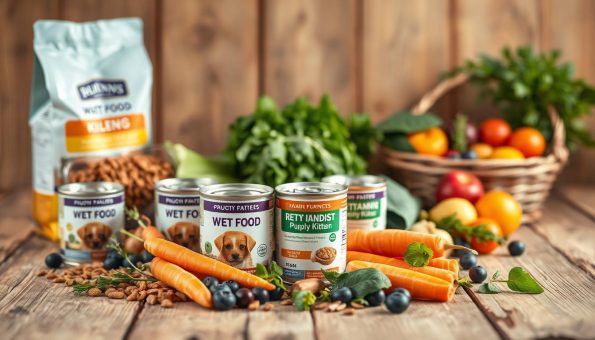
The Role of Protein, Fat, and Carbohydrates
High-quality protein acts as scaffolding for muscle and tissue. Growing animals require 25-30% more than adults—think of it as construction materials for their expanding bodies. Fatty acids like DHA sharpen brain function, with studies showing pups on enriched diets learn commands 20% faster.
Carbs provide quick energy for play but require careful balancing. Too many can lead to midday crashes during training sessions. The right mix supports steady energy for exploring trails or mastering new tricks.
Vitamins, Minerals, and DHA for Optimal Development
Vitamins and minerals form invisible armor against health challenges. Calcium builds strong bones for jumping, while zinc keeps coats shiny after muddy adventures. Research confirms proper ratios prevent skeletal issues in large breeds—a 1.5:1 calcium-phosphorus balance makes all the difference.
DHA doesn’t just aid brain growth—it enhances problem-solving skills. Kittens with sufficient levels navigate obstacle courses more efficiently. Always choose food formulated specifically for growth stages, as generic options lack these precision nutrients.
Selecting and Transitioning to High-Quality Pet Food
Mealtime decisions today lay the groundwork for your pet’s future health and vitality. Smart food choices act like trail markers—guiding young companions toward strong bones, sharp minds, and endless energy for outdoor escapades.
Why Labels Matter More Than Marketing
Always check for the AAFCO statement—your compass in navigating pet food options. This label confirms the formula meets strict standards for growth stages through either nutrient profiles or actual feeding trials. “Foods tested in real-life scenarios prove they support thriving animals,” explains a veterinary nutritionist.
Prioritize brands that conduct feeding trials over those relying solely on lab calculations. These tests ensure puppies kittens digest nutrients properly and maintain ideal body condition during critical development months.
Smooth Shifts to Adult Formulas
Transitioning to adult food requires careful timing. Large breeds often switch at 8-10 months, while smaller companions may need growth formulas until 12 months. Start by mixing 25% new food with 75% current blend, increasing gradually over 4-6 days.
- Day 1-2: 75% old food + 25% new
- Day 3-4: Equal parts mix
- Day 5-6: 25% old + 75% new
Watch for changes in energy levels or digestion during this phase. Active pets exploring hiking trails or agility courses may need adjusted portions when switching formulas. Remember—every companion’s journey to adulthood follows its own unique timeline.
Monitoring Growth and Adjusting Feedings
Tracking your young companion’s progress requires both a keen eye and reliable tools. Like checking a compass during hikes, regular assessments help maintain their health trajectory. Three essential strategies keep their development on course.
Growth Tracking Made Simple
Veterinarians recommend using a 9-point body condition scale weekly. Ideal scores fall between 4-5—ribs should feel like velvet-covered piano keys, not hidden beneath padding. Pair this with growth charts developed through pediatric research methods. These tools work for dogs under 88lbs and all cats.
Smart Meal Scheduling
Young animals need fuel adjustments as they mature. Small-breed dogs often require 4 meals per day initially, while larger companions do well with 3. By six months, most transition to twice-daily feedings. “Neutered pets may need 20% fewer calories within days of surgery,” notes a recent veterinary study.
| Pet Type | Age Range | Meals Per Day | Key Considerations |
|---|---|---|---|
| Small Dogs | 8-12 weeks | 4 | Prevent blood sugar drops |
| Large Dogs | 4-6 months | 3 | Support joint development |
| Cats | 5-6 months | 3-4 | Transition from free-feeding |
Weigh companions weekly using kitchen scales for accuracy. Sudden changes in body condition signal needed adjustments. Remember—each animal’s growth pattern differs, like unique hiking trails requiring personalized navigation.
Embracing Outdoor Adventures with Tailyan Products
Exploring nature with your four-legged friend creates bonds that last a lifetime. At Tailyan, we craft gear that transforms every hike, camping trip, or backyard exploration into safe, joyful experiences. Our designs blend practicality with comfort, letting pets focus on discovering new trails rather than bulky equipment.
Enhancing Active Lifestyles with Quality Outdoor Gear
Lightweight backpacks distribute weight evenly during long walks, while breathable tents provide shaded rest areas. Reinforced stitching withstands claw scratches and rough terrain—essential for health-conscious owners. These tools support pets through every life stage, from energetic adolescence to steady adulthood.
Combining Nutrition and Adventure for Pet Well-being
Smart dietary choices fuel endurance for climbing rocks or chasing fireflies. Pair nutrient-rich meals with our adventure kits to maintain energy levels during all-day excursions. Well-fed companions recover faster, ready for tomorrow’s escapades.
Investing in proper care during early life stages builds resilience for mountain trails and lakeside naps. Tailyan’s gear complements your pet’s health journey, creating shared memories under open skies. Together, we redefine what it means to explore—one paw print at a time.