
More families are treating their furry companions like cherished members of the household, sparking a shift toward homemade meals. Pet owners now prioritize fresh ingredients and transparent sourcing, steering clear of overly processed options. This movement mirrors the natural eating patterns of animals in the wild, focusing on nutrient-rich meals that support energy, digestion, and overall wellness.
Creating meals at home allows you to tailor nutrition to your companion’s unique needs. Whether they’re hiking trails with Tailyan’s adventure gear or lounging indoors, proper nourishment fuels their vitality. Thoughtfully prepared dishes can include lean proteins, healthy fats, and essential vitamins—all vital for maintaining shiny coats, strong muscles, and playful energy.
This guide will walk you through simple recipes and practical tips to craft wholesome meals safely. You’ll learn how to balance portions, select quality ingredients, and adapt recipes for different life stages. Plus, discover how a well-planned menu complements an active lifestyle, making every outdoor excursion with your pet even more enjoyable.
Key Takeaways
- Homemade meals let you control ingredient quality for better pet health.
- Natural, nutrient-focused recipes mimic what animals eat in the wild.
- Properly balanced nutrition supports energy and long-term wellness.
- Tailored diets enhance outdoor adventures and daily activities.
- Simple recipes can be adapted for different breeds and life stages.
Introduction: Embracing a Natural Diet for Your Pet
Modern pet owners are redefining mealtime by mirroring nature’s blueprint for their companions’ nutrition. This approach focuses on whole, unprocessed food that aligns with animals’ biological needs—like the meals their ancestors thrived on. Fresh ingredients deliver nutrients in their most potent form, helping your furry friend stay active and resilient.
Overview of Raw Feeding Benefits
Choosing minimally processed meals offers undeniable advantages. Natural food contains antioxidants that shield cells from pollution and aging. These meals also support digestion, helping pets efficiently absorb nutrients while reducing waste buildup. Studies show species-appropriate diets may lower inflammation, making joints more flexible for playtime or trail explorations.
Incorporating Outdoor Adventures for a Healthy Lifestyle
Proper feeding habits fuel your companion’s zest for adventure. Nutrient-rich meals provide steady energy for hiking or fetching sticks at the park. Pairing smart nutrition with durable gear—like Tailyan’s weatherproof leashes—ensures every outing stays safe and fun. Active pets often show glossier coats, sharper focus, and better stamina, whether climbing hills or patrolling backyard gardens.
This combination of thoughtful meals and outdoor excitement builds a foundation for lifelong health. It’s not just about what’s in the bowl—it’s about creating moments where your pet feels truly alive.
Benefits of a Raw Diet for Pet Health
Pet guardians today are unlocking nature’s blueprint for optimal wellness through fresh, minimally processed meals. These diets deliver nutrients in their purest form, supporting everything from glossy coats to playful energy. By focusing on whole ingredients, you’re giving your companion the tools their body needs to thrive.
Nutritional Advantages and Improved Vitality
Uncooked meals retain more vitamins and enzymes compared to heat-treated options. This means better nutrient absorption, leading to noticeable changes like shinier fur and steadier energy levels. Active animals especially benefit—think of it as premium fuel for hiking or agility training.
Natural food also promotes efficient digestion. Pets often produce smaller, less odorous stools since their bodies use more of what they consume. This cleaner internal system supports detoxification, helping filter out environmental pollutants naturally.
Enhancing Immunity and Longevity
Fresh ingredients are packed with antioxidants that strengthen immune defenses. Over time, this can mean fewer vet visits and quicker recovery from minor illnesses. One study found animals on species-appropriate diets had 20% lower inflammation markers.
| Health Aspect | Raw Diet Impact | Processed Food Impact |
|---|---|---|
| Nutrient Retention | High (90-95%) | Reduced (40-60%) |
| Digestive Efficiency | Optimal | Frequent Issues |
| Dental Health | Cleaner Teeth | Plaque Build-Up |
Long-term benefits include improved joint mobility and healthier aging. Many senior companions maintain their playful spirit longer when switched to this approach early. It’s not just about adding years—it’s about enriching every day with vitality.
balanced raw diet for dogs and cats at home
Creating wholesome meals starts with understanding nature’s recipe for carnivores. Every bowl should mirror what their wild relatives consume, focusing on variety and biological appropriateness. Let’s break down the essentials.
Identifying Key Ingredients and Nutrient Ratios
The foundation lies in the 70-10-10-10 rule: 70% muscle meats, 10% edible bone, 10% secreting organs, and 10% fiber-rich plants. This mix delivers proteins, minerals, and vitamins in proportions that match evolutionary needs.
| Component | Role | Examples | Notes |
|---|---|---|---|
| Muscle Meat | Primary protein source | Beef heart, turkey breast, lamb | Include 3+ types weekly |
| Bone | Calcium & phosphorus | Chicken necks, quail frames | Grind for safety |
| Organs | Vitamin storage | Beef liver, kidney, spleen | Liver must be 4% of total |
| Plants | Fiber & antioxidants | Spinach, blueberries, pumpkin | Puree for digestibility |
Understanding the Role of Muscle Meat, Bones, and Organs
Muscle meats like heart and tongue offer taurine and B vitamins crucial for energy. Edible bone provides calcium, but overdoing it leads to chalky stools—aim for 10% max. Organs pack a nutritional punch: just one ounce of liver covers daily vitamin A needs.
Always rotate protein sources—beef one week, duck the next. This prevents deficiencies and keeps meals exciting. Partner with local farms or trusted suppliers to ensure freshness and quality.
Essential Ingredients and Nutritional Balance
Crafting complete meals for your companion is both science and art. The right mix of proteins, fats, and plant-based elements powers everything from brain function to trail-ready stamina. Let’s explore how these components work together like gears in a well-oiled machine.
Powering Active Lifestyles With Smart Fuel
High-quality proteins build lean muscle, while fats deliver concentrated energy—perfect for pets who love hiking or fetch marathons. Grass-fed meats pack 50% more omega-3s than grain-fed options, supporting cognitive health and joint flexibility. Rotate land animals with fish like salmon twice weekly for optimal EPA/DHA intake.
| Protein Source | Key Nutrient | Activity Benefit |
|---|---|---|
| Grass-Fed Beef | Omega-3 Fatty Acids | Reduces post-hike inflammation |
| Free-Range Chicken | Vitamin B12 | Supports nerve function |
| Wild-Caught Salmon | Astaxanthin | Enhances endurance |
Unlocking Plant Nutrition for Carnivores
While animals thrive on meat, plants offer secret weapons like antioxidants. Blend leafy greens and berries into purees to break down cell walls—this makes nutrients accessible. Pumpkin adds fiber for digestive regularity, especially useful after sampling new trails.
Remember: ingredients work best as a team. A sardine-rich meal with kale puree delivers brain-boosting fats and bone-strengthening vitamin K. Pair these meals with sturdy Tailyan harnesses, and you’ve got a companion ready for mountain peaks or city parks.
Transitioning Your Pet to a Raw Diet Safely
Switching your companion to fresh meals requires patience and precision. Start by introducing new ingredients slowly—think of it as a culinary adventure for their digestive system. This method reduces tummy troubles while building enthusiasm for their upgraded menu.
Gradual Introduction and Portion Adjustments
Begin with small portions mixed into their current meals. Over 7–10 days, increase the ratio of fresh food while monitoring energy levels and stool quality. Active dogs might need 10% more protein during hiking season, while senior companions often thrive with smaller, frequent meals.
Track reactions using a simple journal:
| Day | New Ingredients | Observations |
|---|---|---|
| 1–3 | 15% raw + regular diet | Check for appetite changes |
| 4–7 | 50% raw | Monitor digestion consistency |
| 8+ | Full transition | Assess energy during play |
Hygiene, Storage, and Safety Tips
Always freeze fresh fish for 48 hours to neutralize parasites—thaw in the fridge before serving. Choose tinned sardines packed in spring water, never oil or salt. Store prepared meals in airtight containers, keeping portions refrigerated for 3–4 days maximum.
Sanitize surfaces with vinegar after meal prep to combat bacteria. Use separate cutting boards for animal proteins and vegetables. These steps ensure every bite supports health without compromising safety.
Expert Recipes, Tips, and Common Mistakes in Raw Feeding
Tailoring meals to your companion’s lifestyle ensures they get the right fuel for every adventure. Whether scaling mountains or napping by the fireplace, their nutritional needs shift with activity and age. Let’s explore how to craft meals that grow with them.
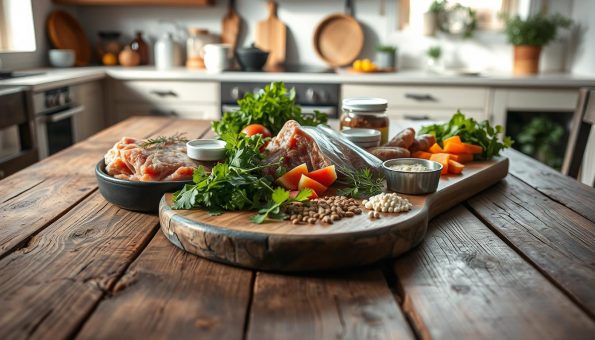
Customizing Diets Based on Age and Activity Level
Active pups and working dogs thrive on calorie-dense recipes. A mix of 4kg chicken with bone, 2kg duck mince, and 1kg organ blend supports muscle development. Add eggs for extra protein—perfect for trail-ready companions using Tailyan’s rugged harnesses.
| Diet Type | Protein Focus | Key Adjustments | Sample Ingredients |
|---|---|---|---|
| Puppy/Active | Chicken/Turkey | High calcium bones | Duck carcass, beef liver |
| Overweight | White meats only | Low-fat cuts | Turkey breast, green beans |
| Working | Fatty red meats | +20% calories | Lamb, pork, sardines |
Liver is non-negotiable—it provides 90% of daily vitamin A. Chop it finely or puree into meatballs for picky eaters. Rotate other organs like kidney weekly for nutrient diversity.
Avoid these common issues:
- Using only one protein source
- Skipping plant fiber
- Freezing meals longer than 4 months
Adjust diets seasonally—add omega-rich fish in winter for indoor pets. Senior companions often prefer softer textures; try slow-cooked beef shank over raw bones.
With smart advice and flexible recipes, you’ll create a complete balanced menu that evolves alongside your furry friend’s journey.
Conclusion
Your companion’s wellness journey thrives on flexibility and observation. Pets, like humans, have unique needs—what fuels one might not suit another. Focus on variety across weeks rather than stressing over single meals. Rotate protein sources like rabbit, turkey, or fish to expose them to diverse nutrients naturally found in wild environments.
Research shows many commercial options fall short of true nutritional completeness. Instead of chasing perfection, aim for consistency. A healthy diet evolves with your furry friend’s age, activity level, and preferences. Track their energy during hikes or playdates to fine-tune portions and ingredients.
Stay informed through trusted information sources and consult your vet team when introducing new foods. Simple practices—like washing bowls after meals or storing portions properly—keep raw feeding safe and enjoyable. Pair nutrient-rich meals with adventures using durable gear, creating a lifestyle where vitality meets joy.
Every choice you make honors their natural instincts. Celebrate the small wins, whether it’s a shinier coat or extra zoomies at the park. By blending science with love, you’re giving them the best possible foundation for a thriving life.