More and more pet owners are looking for ways to share new adventures with their feline companion. This trend goes beyond typical indoor play. People want to include their pets in relaxing outdoor moments right at their home.
Creating a secure outdoor seating area provides a wonderful experience for both you and your cat. It offers a controlled space for fresh air and mental stimulation. Understanding your cat’s unique needs is the first step to a successful setup.
This comprehensive guide will help you design the perfect home environment. We cover everything from safe furniture choices to cat-proof plants. You will also learn about local spots that welcome leashed or carrier-trained felines.
Key Takeaways
- The desire for shared outdoor time with cats is a growing trend among owners.
- Safety and understanding feline behavior are the most critical factors.
- Proper design creates a stimulating and secure environment for exploration.
- This guide provides practical advice for both home and public spaces.
- Supervised outdoor exposure offers significant benefits for an indoor cat’s well-being.
Understanding Cat-Friendly Patios: What They Offer
Transforming a standard patio into a secure environment for cats requires thoughtful planning. This specialized space differs significantly from generic outdoor areas. It addresses feline instincts while ensuring complete safety.
The growing acceptance of pets in public spaces reflects this trend. According to WalletHub, Raleigh ranks #17 for most pet-friendly cities. Many establishments now provide water bowls and designated seating areas.
Key Features for a Feline-Friendly Space
Essential elements create a safe haven for exploration. Secure fencing prevents escapes while allowing sensory stimulation. Elevated perches satisfy climbing instincts.
Access to fresh water stations remains crucial for hydration. The quality of design directly impacts a cat’s comfort level. Vertical spaces and hiding spots encourage natural behaviors.
| Essential Features | Desirable Additions | Safety Considerations |
|---|---|---|
| Escape-proof barriers | Climbing structures | Non-toxic plants |
| Weather protection | Interactive toys | Secure entry points |
| Fresh water access | Multiple perching levels | Supervision protocols |
Benefits of Outdoor Time for Cats
Supervised outdoor exposure offers significant advantages. Mental stimulation reduces boredom and stress. Physical activity promotes healthier weight management.
Controlled patio access differs from free-roaming. It provides environmental enrichment without risks. This represents a valuable choice for dedicated pet owners.
Essential Tips for Creating Cat-Friendly Outdoor Seating Areas
The foundation of a successful outdoor area for cats lies in choosing the right furnishings. These essential tips will help you create a space that serves both human relaxation and feline exploration needs.
Selecting Appropriate Furniture
Choose weather-resistant materials that withstand clawing and jumping. Textured surfaces provide better grip for climbing. Avoid toxic treatments or sharp edges that could harm curious pets.
Consider furniture arrangements that create natural pathways. Elevated platforms satisfy climbing instincts. These tips ensure your outdoor seating serves dual purposes effectively.
Ensuring Safety and Comfort
Make sure to secure the perimeter thoroughly. Check for gaps or potential escape routes. Create multiple comfort zones with varying sun exposure.
Strategic placement addresses temperature concerns. Cool spots in summer and warm areas in cooler months are essential. The right choice of materials enhances comfort throughout the year.
Test your setup before introducing your cat. Verify all safety measures are properly implemented. These practical tips create a harmonious environment at your home.
Cat-Friendly Patios: Best Outdoor Spots for You and Your Feline
The hallmark of a truly accommodating patio lies in its ability to serve both human relaxation and feline exploration. This balanced approach transforms any outdoor spot into a shared sanctuary. Whether designing your own home space or evaluating public venues, the core principles remain consistent.
Different configurations serve various needs effectively. Enclosed courtyards provide maximum security for unsupervised time. Supervised dining areas offer social opportunities while maintaining control. Each type requires specific safety considerations and preparation.
Practical tips for assessment include checking perimeter security and identifying potential hazards. Look for elevated perches and hiding spots that cater to natural behaviors. Your feline companion will appreciate these thoughtful details.
Preparation is crucial for successful outdoor experiences. Gradual acclimation helps cats feel comfortable in new environments. Seasonal tips address temperature concerns and weather protection. These considerations ensure year-round enjoyment at your home or favorite public location.
The right outdoor spot strengthens the bond between owner and pet. It provides mental stimulation and physical activity in a controlled setting. This shared space becomes a cherished part of your daily routine.
Outdoor Dining at Cat-Friendly Restaurants and Patios
Restaurant patios are evolving to accommodate not just human diners but their animal companions as well. Many establishments now recognize the value of creating welcoming spaces for pet owners who want to share dining experiences with their feline friends.
Raleigh’s culinary scene offers several options for those seeking pet-friendly outdoor seating. The Flying Biscuit Café provides a comfortable seating area where pets can relax while owners enjoy Southern comfort food. Trophy Brewing & Pizza features a social patio atmosphere that welcomes well-behaved animals.
Balancing Ambience and Pet Safety
Successful restaurant patios maintain a pleasant atmosphere while ensuring animal safety. Establishments typically designate specific zones within their outdoor seating area for pets. This approach minimizes disruptions to other guests.
Staff often provide water bowls for four-legged visitors. While most venues primarily cater to dogs, some accommodate cats in secure carriers. Proper supervision remains essential for all animals in public dining spaces.
Accessibility for Both Owners and Felines
Thoughtful design makes restaurant visits comfortable for everyone. Easy access to the outdoor seating area benefits owners carrying supplies or pets in carriers. Quiet corners help nervous animals feel secure.
Establishments with spacious layouts offer the best experience. They allow adequate distance between tables while maintaining social atmosphere. This consideration benefits all patrons, including those without pets.
| Establishment Feature | Benefit for Pets | Benefit for Owners |
|---|---|---|
| Designated pet zones | Reduced stress from crowds | Peaceful dining experience |
| Water station access | Proper hydration during visit | Convenient pet care |
| Spacious seating layout | Comfortable movement space | Easy supervision ability |
Exploring Urban Patios with a Feline Twist
City centers offer surprising possibilities for cat owners seeking to integrate outdoor experiences into their urban lifestyle. Metropolitan environments are evolving to accommodate pets beyond traditional dog parks.

Raleigh, known as the City of Oaks, demonstrates this trend beautifully. The city features innovative commercial developments that welcome animal companions.
Hidden Gems in City Centers
Lafayette Village at 8450 Honeycutt Road represents one such hidden gem. Most shops in this charming place allow pets and include dedicated green spaces.
The Village District at 2034 Cameron Street offers another excellent urban space. This shopping complex provides pet stations and water bowls throughout the facility.
These locations showcase how urban place design increasingly considers pet owners’ needs. They incorporate amenities like shaded areas and quiet corners.
Navigating busy city environments requires careful planning for feline companions. Choose less crowded times and identify peaceful spots within these urban oases.
The City of Oaks continues to lead in creating welcoming environments. This urban experience differs significantly from suburban or rural settings.
Choosing the Right Patio Based on Your Home Layout
Every residential property presents unique opportunities when planning a secure outdoor environment for cats. Your home‘s existing structure and lot configuration significantly influence the ideal patio design.
Begin by evaluating potential locations around your house. Consider front yards, backyards, side areas, balconies, or even window boxes. Each space offers different advantages for safety and enrichment.
Architectural features can enhance security naturally. Use existing walls as boundaries and incorporate structural elements into enclosure designs. This approach maximizes your available space effectively.
Different housing types require tailored solutions. Single-family homes with large yards allow expansive designs. Apartments with small balconies need creative vertical solutions. Every living situation offers viable options.
The right choice balances practical constraints with your cat’s needs. Consider sun exposure, privacy, and proximity to indoor areas. These factors determine the ideal place for development.
Create a decision framework based on your home‘s characteristics and your lifestyle. This ensures your investment creates a valuable addition to your property. The perfect choice enhances both your living space and your cat’s quality of life.
Integrating Pet-Safe Landscaping and Plants
The ASPCA provides essential guidance for choosing non-toxic plants that won’t harm exploring pets. This knowledge helps create beautiful outdoor spaces where safety comes first. Your landscaping choice directly impacts your pet‘s well-being.
Highlighting Cat-Friendly Plant Options
Several plant options offer both beauty and safety. Spider Plants thrive in various light conditions with minimal care. Boston Ferns prefer humid environments with regular water.
African Violets bring vibrant color to any home patio. Parlor Palms need little light or water, making them ideal for busy owners. These options provide plenty of variety for different spaces.
Low-Maintenance and Non-Toxic Selections
Drought-tolerant plants simplify maintenance for pet owners. Catnip and Cat Grass offer interactive enrichment for feline pets. Rosemary serves as both aromatic herb and safe landscape feature.
These selections require minimal water and care. They create plenty of visual interest without extensive upkeep. Your home environment benefits from these resilient choices.
| Plant Variety | Care Requirements | Pet Benefits |
|---|---|---|
| Spider Plant | Adapts to light variations, minimal water | Non-toxic, fast-growing for quick coverage |
| Boston Fern | Humidity preference, bright indirect light | Safe foliage, creates natural hiding spots |
| Parlor Palm | Low light tolerance, infrequent watering | Pet-safe vertical element for small spaces |
Proper plant placement creates dedicated zones within your home patio. Always verify plant safety before introducing new varieties. This approach ensures a secure environment for all household pets.
Maximizing Comfort: Outdoor Seating and Weather Considerations
Weather considerations play a pivotal role in determining how enjoyable your outdoor space will be for extended use. Creating a comfortable environment requires thoughtful planning around temperature control and protection from elements.
These practical tips help ensure your setup accommodates both human and feline needs throughout changing seasons. The right approach transforms any area into a welcoming retreat.
Finding the Right Shade and Sunlight Balance
Cats naturally seek warm spots for basking and cool areas for temperature regulation. Your outdoor seating arrangement should offer both options within easy reach.
Assess sun patterns throughout the day to optimize placement. Morning sun differs from afternoon exposure. Understanding these movements helps position resting areas effectively.
Natural shade solutions include trees and planted arbors. Manufactured options like pergolas and retractable awnings provide flexible control. This variety ensures comfort regardless of weather conditions.
Temperature management extends beyond shade alone. Cooling mats and elevated seating allow better air circulation. Proper ventilation prevents heat buildup in enclosed areas.
Seasonal adaptations require different approaches. Wind protection matters during cooler months. Adequate ventilation becomes crucial in humid summer weather.
The quality of your outdoor seating comfort comes from designing the space in a way that allows self-regulation. Microclimates within the area let occupants move between different temperature zones.
Follow these tips to create an environment that remains comfortable year-round. Thoughtful planning ensures your outdoor seating area serves its purpose effectively.
Navigating Safety: Fencing, Leashes, and Cat Enclosures
Safety measures form the cornerstone of any successful outdoor experience for feline companions. Proper containment prevents escapes and protects pets from urban dangers. These essential tips help owners create secure environments.
Three primary methods offer protection for outdoor access. Permanent fencing requires specific specifications to contain agile cats. Leash systems provide mobility for public excursions. Custom enclosures attached to your home offer permanent security.
Fencing solutions need careful planning for effectiveness. Minimum height requirements prevent jumping escapes. Overhead coverage stops climbing attempts. Foundation security blocks digging or squeezing underneath barriers.
Leash systems differ significantly from dog equipment. Proper harness fitting prevents slipping and injury. Raleigh regulations require leashed cats in public spaces. These laws emphasize responsible pet ownership.
Catios represent permanent safety solutions for home environments. These custom enclosures allow unsupervised outdoor access. They provide enrichment while maintaining complete control. Different designs suit various home layouts.
Each safety approach suits different lifestyles. Apartment dwellers might prefer leash training. Homeowners can invest in fencing or enclosure systems. Public space visitors need portable restraint options.
Regular equipment inspection remains crucial for all methods. Vigilant supervision prevents accidents regardless of containment choice. These practical tips ensure owners provide maximum protection for their pets.
Inviting Feline Friends: Tips for Cat Behavior Outdoors
Understanding your cat’s unique psychology is the first step toward a successful outdoor introduction. Cats experience new environments in a completely different way than dogs. Their territorial nature and sensitivity to stimuli mean that even a familiar patio can feel like unknown territory.
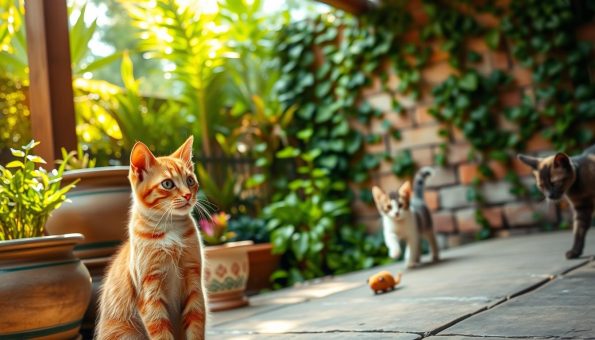
Successful outings depend on recognizing your furry friend‘s individual personality. Some cats are bold explorers, while others are cautious observers. These things determine the best approach for each animal.
Acclimating Your Cat to New Environments
Begin with very short, supervised sessions. Let your friend explore a secure area for just five minutes. Gradually increase the time as they show signs of comfort.
Watch their body language closely. A relaxed posture and curious sniffing are good signs. Hiding, flattened ears, or a puffed-up tail signal stress. These tips help you adjust the experience.
Bring their favorite toys and treats outside. This creates positive associations with the new space. Your calm energy reassures your furry friend that everything is safe.
Respect their pace above all else. Never force a cat to stay outside if they seem frightened. The goal is a happy friend, not just an outdoor one. These simple tips make a big difference.
The Role of Water Features in Cat-Friendly Outdoor Areas
The availability of fresh water stations significantly enhances the safety and appeal of outdoor environments. Proper hydration represents a critical component for any pet‘s well-being during outdoor time.
Establishments like Ridgewood Wine & Beer demonstrate this commitment by providing water bowls on their spacious patio. This thoughtful approach ensures visiting animals remain comfortable and hydrated.
Setting Up Hydration Stations for Felines
When designing your home space, accessible fresh water becomes essential. Dehydration risks increase significantly during warm weather conditions.
Moving water often appeals more to felines than static sources. Cat water fountains provide continuous circulation that attracts curious pets.
“Proper hydration stations transform basic areas into comprehensive retreats for animal companions.”
Consider these key factors when selecting water features:
| Feature Type | Maintenance Level | Pet Appeal |
|---|---|---|
| Simple Bowls | Daily cleaning required | Basic hydration solution |
| Recirculating Fountains | Weekly maintenance | High attraction for cats |
| Integrated Water Features | Professional installation | Dual-purpose aesthetic |
Place multiple stations throughout your outdoor area. This ensures your pet always has convenient access. Strategic placement encourages proper hydration habits.
Stable containers prevent tipping accidents. Choose materials that resist algae growth and simplify cleaning. These considerations create a safe environment for all owners and their companions.
Incorporating Multi-Pet Considerations: Dogs and Cats Together
Households with both canine and feline companions face unique design challenges when creating shared outdoor environments. These different species have distinct territorial instincts and comfort requirements that must be addressed simultaneously.
Successful multi-pet spaces require careful zoning strategies. Separate areas allow each animal to enjoy the environment while maintaining appropriate boundaries. Vertical elements give cats escape routes above ground-level activity.
Creating Safe Spaces for All Pets
Gradual introductions build positive associations between your pets. Start with short, supervised sessions in the outdoor area. Watch their body language closely for signs of stress or comfort.
Some dogs and cats become genuine friends who happily share spaces. Others may need permanent separation or scheduled rotations. Understanding individual personalities beyond species generalizations is crucial.
Public dog parks demonstrate effective separation principles with size-based zones. You can adapt this concept by creating species-appropriate areas within your home environment. This approach ensures safety for all your furry friends.
Seasonal Outdoor Patio Design Ideas for Pet Owners
Seasonal changes require thoughtful adjustments to your home‘s outdoor setup. These practical tips help owners maintain a safe environment throughout the year. Different weather conditions demand specific modifications.
Spring renewal focuses on deep cleaning and enclosure inspections. Check for winter damage and refresh planting areas. Introduce new vegetation that provides plenty of sensory stimulation.
Summer adaptations emphasize cooling strategies and shade enhancement. Maintain hydration stations and manage increased insect activity. These things ensure comfort during warm months.
Autumn preparations create cozy spaces as temperatures drop. Manage fallen leaves and prepare for winter conditions. Your outdoor place should transition smoothly between seasons.
| Season | Primary Focus | Key Adjustments |
|---|---|---|
| Spring | Renewal & Inspection | Deep cleaning, damage assessment, new plants |
| Summer | Temperature Management | Shade enhancement, hydration, pest control |
| Autumn | Transition Preparation | Leaf management, cozy elements, winter readiness |
| Winter | Safety & Accessibility | Weather protection, limited access, warm zones |
Winter considerations vary by climate region. Cold areas require proper winterization techniques. Temperate regions can maximize mild weather opportunities.
Portable solutions offer flexibility for quick weather changes. Avoid permanent installations that only work seasonally. These tips help maintain year-round enjoyment at your home.
Establish a maintenance schedule that anticipates seasonal transitions. This proactive approach ensures your space remains inviting. Your home environment will provide consistent comfort through all weather conditions.
Local Spotlight: Cat-Friendly Outdoor Spots in the United States
Across the United States, regional differences create unique opportunities for pet-friendly outdoor spaces. North Carolina stands out as an exemplary region, with Raleigh ranking #17 among the most welcoming cities for animal companions.
The state offers numerous establishments that accommodate furry friends. Popular locations include Flying Biscuit Café and Trophy Brewing on Morgan Street. Raleigh Beer Garden provides another excellent option for pet owners.
Regional Variations in Patio Designs
Climate significantly influences how outdoor areas are designed. North Carolina‘s mild weather allows for year-round use of outdoor seating areas. Colder regions require more adaptable indoor outdoor hybrid spaces.
These variations affect everything from materials to layout. Pet owners should consider local conditions when planning outings. This is everything need know about regional adaptations.
“Successful pet-friendly spaces balance safety with sensory enrichment for all animal companions.”
Commercial districts increasingly accommodate visitors with pets. Many shopping areas now feature dedicated seating areas. These spaces often include water stations and shaded zones.
| Region Type | Climate Considerations | Design Features |
|---|---|---|
| Temperate (e.g., North Carolina) | Year-round usability | Open-air layouts, minimal weather protection |
| Four-Season | Seasonal adaptations needed | Enclosed areas, heating/cooling options |
| Arid | Heat management crucial | Shade structures, cooling systems |
When visiting public spaces with your furry friend, proper preparation ensures a positive experience. Research establishment policies beforehand. Always maintain control of your companion in shared outdoor seating areas.
User Experiences: Stories from Cat Owners and Patio Enthusiasts
The most compelling evidence for creating feline-friendly environments comes directly from those who’ve done it. Real people share their journeys transforming ordinary spaces into safe havens for their curious companions.
Real-Life Success Stories and Tips
Sarah transformed her small apartment balcony into a secure retreat for her timid cat. She started with short supervised sessions. Now her feline friend eagerly awaits daily outdoor time.
“The value became clear when I saw his confidence grow,” she shares. These personal tips from experienced people provide practical guidance for any home setup.
Mark built an elaborate catio attached to his single-family house. He overcame budget constraints using creative solutions. “The investment added tremendous value to our property,” he notes.
Many people discover that nervous cats benefit most from gradual introductions. Simple things like familiar bedding make a big difference. This way of thinking helps any feline friend feel secure.
Community forums offer plenty of inspiration for different home configurations. From balcony conversions to backyard projects, these stories demonstrate what’s possible. The shared knowledge adds value to everyone’s efforts.
Essential tips include starting small and observing your cat’s comfort level. Each success story reinforces the value of patience and adaptation. Your home can become the perfect environment with the right approach.
Conclusion
As we conclude this comprehensive exploration, the central theme remains clear: safety and enrichment go hand in hand. This guide has equipped pet owners with essential knowledge for creating secure outdoor environments.
The right choice depends on your specific circumstances and your feline friends‘ personalities. Whether modifying your home space or visiting public venues, proper preparation ensures positive experiences for all pets.
Remember to prioritize identification, vaccinations, and access to food and water. Connect with fellow owners to share insights and discover new opportunities.
With thoughtful planning, you can provide enriching experiences that strengthen bonds and enhance quality of life. Your commitment to safety creates lasting memories with your cherished companions.